
When to Replace Your Brake Pads and How to Tell They’re Wearing Out
Your car’s brakes are one of its most important safety features, and keeping them in good condition is essential for safe driving. Worn-out brake pads can reduce braking efficiency, increase stopping distances, and even damage other braking system components. Knowing the warning signs of worn brakes and replacing them on time can prevent costly repairs and, more importantly, keep you safe on the road.
Signs Your Brake Pads Need Replacing
1. Squeaking or Squealing Noises
One of the earliest signs of worn brake pads is a high-pitched squeaking noise when braking. This sound is caused by a built-in wear indicator designed to alert you that your brake pads are wearing thin.
2. Grinding Sounds
If you hear a grinding noise when braking, it likely means the brake pads are completely worn out, and the metal components are rubbing against the brake rotor. This can cause significant damage and should be addressed immediately.
3. Longer Stopping Distances
If your car takes longer to stop than usual or you feel a decrease in braking performance, it may indicate that your brake pads are too worn to function effectively.
4. Vibrations When Braking
A vibrating or pulsating brake pedal could indicate uneven wear on the brake pads or a problem with the rotors. If you experience this, get your brakes inspected promptly.
5. Thin Brake Pads
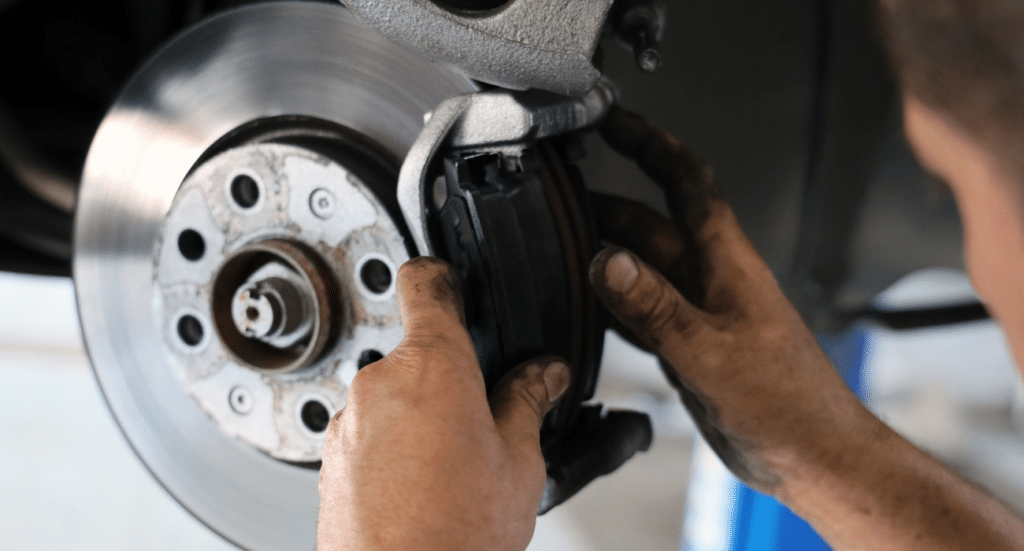
You can visually inspect your brake pads through the wheel spokes. If they appear to be less than 3mm thick, it’s time to replace them.
6. Brake Warning Light
Many modern cars have a dashboard warning light that illuminates when the brake pads are too worn. If this light comes on, don’t ignore it—schedule a brake inspection as soon as possible.
Why Timely Brake Pad Replacement is Crucial
- Enhanced Safety – Worn brake pads reduce stopping power, increasing the risk of accidents.
- Preventing Costly Repairs – Ignoring brake pad wear can lead to rotor damage, requiring expensive replacements.
- Better Performance – New brake pads restore full braking efficiency, ensuring smoother and more responsive braking.
How Often Should You Replace Your Brake Pads?
The lifespan of brake pads varies depending on driving habits, road conditions, and vehicle type. Generally, brake pads should be replaced every 50,000 km, but frequent stop-and-go driving may require more frequent replacements. Always refer to your vehicle’s manual for specific recommendations.
Final Thoughts
Regular brake inspections and timely replacements are essential for safe driving. If you notice any of the above warning signs, don’t delay—get your brakes checked by a professional to ensure your vehicle remains safe and roadworthy.