
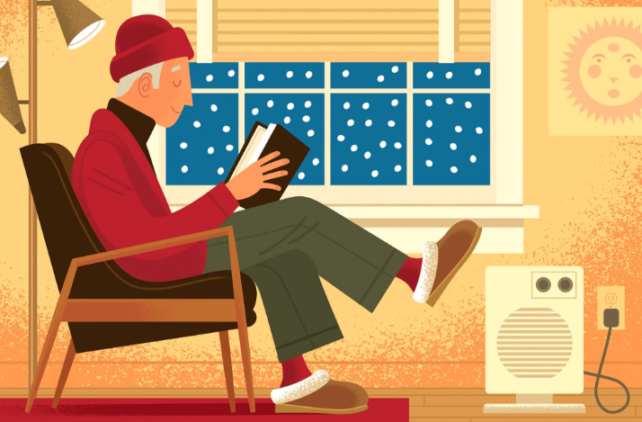
The older I get (and I’m 55 this year), the harder I find it is to stay warm in winter, indoors or out, and I’m happy to share the measures I’ve found helpful, short of moving to the tropics. You don’t have to be a senior citizen to succumb to the known hazards of winter weather.
Of course, it helps to be financially able to implement the suggestions below, which is why I make it a point to donate dollars and goods to organisations that help protect the most vulnerable among us against cold-related injury and illness.
■ Dress in Layers. Let’s start with the basics: What to wear. Layers of loose-fitting clothing trap the body’s natural warmth, and do it best with an insulating inner layer (for example, Merino wool products by Icebreaker or Kathmandu) and an outer layer resistant to wind and water. The less body area exposed, the warmer you’ll be. If your clothing gets wet, it loses much if not most of its protection, carrying heat away from the body instead of keeping it in. The warmest down-filled garment is ineffective when wet.
British scientists who studied how people in eastern Siberia protect against the cold found that they typically wear four or more layers of clothing — generally of fur or other thick material — and do not begin to feel the effects of cold until temperatures drop below minus 20 degrees Celsius.
■ Protect the Extremities. Hats that cover the ears (or earmuffs) are vital because the head has little insulation against the cold. Scarves keep the neck and chest warm and can be used to protect the face against wind. Mittens keep hands warmer than gloves, especially if they are fur-lined.
For cold feet, there are lined waterproof boots rated by temperature, which can make a real difference. Ugg boots are very toasty but many models are not waterproof, and some find them too warm to wear indoors. Slip-resistant soles can help keep you upright on wet or icy pavement.
■ Safeguard Your Health. Stay well hydrated and well nourished, and wash your hands often. Prevent serious infections by getting an annual flu shot and, for those over 65, at least one and preferably both of the pneumonia vaccines now available.
■ Prepare Your Home. Reduce drafts and lower heating costs by insulating the roof, walls, window sashes and doorframes. Keep your thermostat set at a comfortable temperature during the day — between 20 and 24 degrees Celsius (22 degrees on average), depending on the age and health of the occupants. Keep in mind that babies and older adults are often easily chilled.
However, you can save a lot of money if you lower the thermostat and wear warmer clothing indoors. Physical activity also generates body heat, so sit less and move more if possible. Lower the thermostat at night to about 16 degrees, and use pyjamas and quilts to keep warm while asleep. You might like to switch to flannel sheets as soon as the outside temperature at night drops below 10 degrees.
■ Prevent Fires. Fire is a major winter hazard, most often avoidable. Nonetheless, no dwelling should be without a working smoke and carbon monoxide detector (often available in combination). Never use the stove or oven for heat. Instead, invest in a well-designed portable space heater and use it safely, protected from young children and pets. Electric heaters are the only kind safe to use unvented indoors. If you use a fireplace, always protect it with a well-fitted screen to prevent sparks and embers from escaping. Heatpumps are great for family rooms or lounges, but make sure you have these serviced annually to optimise their efficiency, and be sure to check the filter regularly as it gets caked up with dust quite quickly.
If possible, avoid using extension cords, a frequent cause of house fires. But if you must, make sure cords are modern, are not frayed and are rated for the intended device. Never use one to power a heater or for more than one device. A much safer option: Have additional wall plugs installed.
■ Drive Safely. Make sure your car is prepared for winter conditions, with a good battery, tires with good treads that are properly inflated, working windshield wipers and plenty of window washer fluid.
Teach yourself to steer into a skid, as it’s far more likely to happen to you in winter. If you’re not sure how, watch a Youtube video.
Always drive at speeds and distances from other vehicles appropriate for road conditions. It takes longer to stop on wet roads, and watch out if there’s is ice, especially in the South Island or the Desert Road. Having to brake hard on a slippery road is an invitation to disaster.
By Jane Brodie