
Our native wildlife faces unprecedented challenges as our urban areas become more built up and we clear natural habitats for development. As concrete jungles replace the landscapes these creatures once called home, it becomes increasingly important to counteract any threat to their existence by creating green zones designed to attract and nurture them.
In this guide, we’ll explore the potential of garden design in providing a lifeline for our native creatures, offering them a haven and a fighting chance at survival.
Know Your Natives
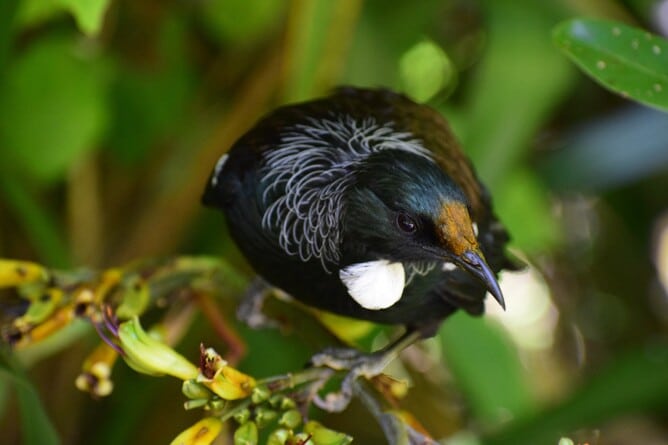
It’s essential to know who your wildlife guests might be to design a garden that caters to them. New Zealand has many unique species, including the iconic Kiwi, tui, kererū (wood pigeon) and various insects. Understanding their habits, preferred habitats, and dietary needs will guide your design choices.
Native Plant Palette
Selecting native plants is crucial to attract and sustain local wildlife. Choose plants that provide food, shelter and nesting sites. Consider flax, kahikatea and kowhai for birds and host plants for caterpillars to support the life cycle of butterflies and moths.
Water Features
Many native species are attracted to water sources. Incorporating a bird bath, pond, or stream into your garden can entice birds like the fantail and bellbird. Ensure there are shallow areas for smaller creatures to access water safely.
Natural Shelter
Create natural shelter zones with native trees and shrubs. Dense vegetation provides nesting sites and offers protection from predators. Consider incorporating native trees like pohutukawa or kahikatea, which can serve as year-round havens for many wildlife species.
Avoiding Chemicals
Minimise or eliminate the use of chemical pesticides and herbicides in your garden. These substances harm insects and birds and will disrupt the delicate balance of the ecosystem you’re trying to foster.
Understanding Seasonal Needs
Plan your garden to provide resources throughout the seasons. Different species have varied needs at certain times of the year, whether nectar in spring, fruit in summer, or seeds in autumn. A well-balanced garden ensures year-round support for local wildlife.
Involve the Community
Encourage your neighbours to join in creating wildlife-friendly gardens. Connect with local community groups or conservation organisations to share ideas, resources and experiences. The collective effort can significantly impact the well-being of our native wildlife.
By incorporating these principles into your garden design, you can play a crucial role in preserving and enhancing the natural habitats of our unique wildlife. Creating a haven for our native creatures not only brings a touch of nature to your doorstep but also contributes to the broader conservation efforts that are essential for the well-being of our planet.
Happy gardening!