
Interior design trends aren’t quite as easy to keep up with as clothing fashion – it is way more expensive to replace a sofa than it is a pair of jeans or a jacket. Despite that, trends are constantly changing. The wise designer picks from these new or fashionable looks to create something that is more timeless and less susceptible to becoming outdated.
To achieve this, there are some basic elements to work with to create the look you’re after and core principles to follow so that you will end up with a room that you love.
Elements
- Space
- Light
- Furnishings
- Colour
- Texture
Principles
- Sense of Place
- Harmony – balance, emphasis, pattern, contrast, scale, proportion and context
- Lighting
- Quality
The Most Important Thing
There are numerous design approaches – minimalism or maximalism, eclectic, Scandinavian, mid-century, beach house, traditional, neo-classical, modern – the list goes on.
Fundamentally, what is important is that you should like it and feel comfortable. It is your space after all. We don’t all share the same sense of taste so please yourself, not others!
The Danes have a word for it – Hygge (hyu-gah). It is more than ‘comfortable’… it is homeliness, a sense of relaxation and security and well-being.
It is hard to imagine a minimalist interior offering up that feeling, but for some people, ‘less’ is not just ‘more’, but actually creates a palpable sense of intimacy and peace that others may find in a maximalist riot of colour and stuff.
Find out what you like. Look at the vast resources online and discover the looks you want to dive into and inhabit, and the ones you want to run away from. Scandinavian maybe last year’s look, but if that’s what tickles your sense of well-being, then ignore fashion and go with comfort.
(Also look at what you don’t like because that will help narrow down options.)
Sense of Place
Any room you are working with has defined walls, entrance and exit points, light sources, ceilings and floors all made with different materials. Concrete flooring provides a different feel to timber or carpet. Concrete walls are different to brick, plasterboard or plywood. The size of the room, the height of the ceiling and the width of the windows all contribute to the space.
Different room layouts dictate the location of furniture, accessories and lighting. Heavy traffic paths can either be avoided or deliberately broken through placement. Look at where the light is coming from, and the shape and size of your furniture. You can create a sense of place by using your furniture to define where you want to hang out, even in the largest room.
In working out where things go best, start with the biggest stuff – the sofas and lounge chairs, beds, dressers and tables because that will dictate where things like bookcases, TVs, and coffee tables will go.
Where are the natural light sources or views? Are they to be celebrated or ignored? Low-light areas can create a dark, uncomfortable space or create a snug retreat – that’s up to you.
Size and shape are important here, too. Is the room small or large? High-ceilinged or low? Square or rectangular – or a more difficult triangular or round? Positioning your furnishings in these spaces is about occupying the space and defining it – a large room can be made intimate with a grouping of furniture that is drawn together in an intimate way.
Elements
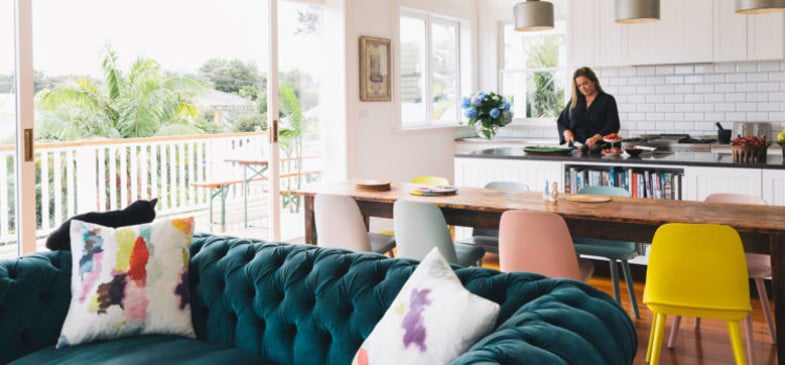
Colour, shape, size, and texture begin to play a role here. Oversized sofas in a small room can work sometimes, but usually, they crowd everything else out. Bright colours can work, but depending on the look, you can match them with complimentary bright coloured items or with neutrals.
Context and harmony are important. A muted grey sofa is going to look misplaced in a maximalist room full of brightly coloured decorative elements. An electric blue Memphis armchair can create an unsettling focal point in a neo-traditional interior.
Use furniture that reflects the look you wish to achieve.
Harmony
Don’t have furnishings bunched on one side of the room. Use them to create an intimate but balanced area. After all, what you are doing as you create this living space is defining a space that you want to spend time in, with or without others.
Balance, emphasis, pattern, contrast, harmony, scale, proportion and context – these things come together in a magical way.
Generally, if you are uncertain then avoid bold colours and patterns. Neutral whites and greys are good starting points, and you can create points of colour to lift the décor beyond the ordinary. Avoid having several items of the exact same colour – you risk creating a ‘twee’ look that gives the impression of being forced.
Lighting Your Living
Natural light and artificial light are often not thought about but are essential elements of living indoors. Lighting helps define the space and create ambience.
There are basic dos and don’ts:
- Don’t have one central light source – create different sources of light as this reduces high contrast and makes for a warmer ambience
- Do think subtle. Soft lighting is restful.
- Do use spotlighting for work areas. You want to be able to see what you are preparing in the kitchen or eating at the dining table. But you don’t want operating theatre level lighting when you are dining.
- Don’t use cheap light fittings. They die, they look terrible after a short time, and they don’t work as well. (If your budget is tight, you can upgrade later)
- Use table and floor lamps – and move them about to see what the best location is.
- Make switches easy to access.
- Lights can be a centre point or not – don’t sweat it. If you can’t afford that beautiful light fitting, run the wire and buy it later, when you can.
Choose Quality……even if it’s just one item.
You can always upgrade, but if you have one beautiful item, everything else is lifted. A genuine Eames Lounger makes the old sofa look good, too! (And with the right lighting, no one can see the fraying and the stains).
Quality-built pieces look better, the fabric lasts longer, they are more comfortable, and they work better.
“Quality is remembered long after the price is forgotten”
“No one ever regretted buying quality”
These are cliches because they are true. Go on – spend a bit extra. You know you want to (and you’ll be glad you did).