
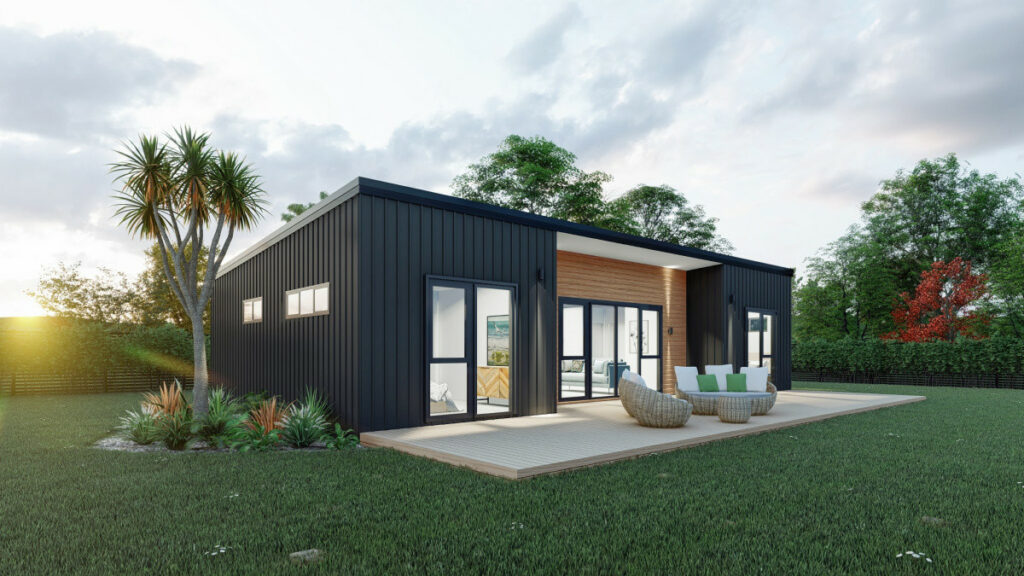

Kitset homes are built from components constructed in a factory in a modular system and then put together on-site whereas transportable homes are built in a factory and shipped whole to the site. Despite their differences, they share numerous advantages:
- In a controlled atmosphere, there’s little risk of water getting to the materials during construction.
- Quality control is much better
- There’s no downtime due to bad weather
- Speed of construction is much better – leading to lower costs
Kitset homes are more affordable, easily constructed and available in various designs. From granny flats to family homes, baches and home offices, kitset homes offer a convenient solution.
Why choose a kitset home?
Building a kitset house puts you on the affordable road towards the Kiwi dream of home ownership.
By building a kitset home, you’ll be able to:
- Save money because it will be much faster
- Build your own home from homegrown renewable resources
- Ensure quality due to the factory build methods and componentry
Can I design my own kitset home?
Companies supplying kitset homes usually offer a variety of house plans – both single-storey and two-storey – and are available with one, two, three and four bedrooms. You can pick a functional, practical house design straight from the catalogue. Alternatively, alter an existing house plan to suit your needs or supply the company with your own plan.
Designing a kitset home will be cheaper than employing an architect, but you may be imitated by what you can achieve.
What makes a good house design?
If you decide to design your own kitset home, be sure to:
- Use the space within your home effectively
- Make good use of your section – consider the space and direction of sun and wind exposure, neighbours or roads for privacy and noise.
- Consider materials (timber is most commonly used, with steel roofing, but there are alternatives)
- Think about energy efficiency in your home (there are kitset house companies that specialise in eco-design)
- Think about the look of your home, as well as comfort and functionality
- Ensure your home is weather-tight
- Take into account lifestyle requirements such as outdoor entertaining, garden space and play areas for children.
- Think about the future and how your needs may change over time, from small kids to teenagers to just you
For house design inspiration, check out architectural magazines and architects’ websites, visit showhomes and look at new subdivisions or buildings in your area.
What do I need to tell the designer for a customised kitset home?
Your specifications will be essential to ensuring that you get the home you’ve visualised. You’ll need to outline:
- The size of the house
- One storey or two stories – or more?
- The number of bedrooms (and their relative sizes)
- The number of bathrooms and ensuites
- The size and location of the kitchen
- External cladding and roofing
- Heating requirements
Can I get a ‘green’ kitset home?
We’re all moving toward a more ‘green’ approach, but what does this mean when it comes to kitset homes? An eco-friendly house will have a lesser impact on the environment. An eco-house plan will have:
- Good airflow to prevent moisture buildup and minimise the need for ventilation systems
- Sustainable building materials that are durable yet low in toxicity and environmental impact, e.g., using timber grown on renewable plantations or recycled building materials
- Natural climate control through harnessing the warmth of sunlight and maximising good insulation beyond building code minimum
- A rainwater collection tank for watering your garden and things like flushing the toilet, where possible
- Solar hot water heating or solar power panels
- Shade for summer to reduce heat gain
What’s included with my kitset home?
Kitset home companies in New Zealand vary in what they offer, so make sure you read the fine print. You should receive a plan and specifications, along with pre-fabricated roofing, doors and windows, exterior cladding, insulation and the rest of the home’s structural parts.
Check what your company doesn’t include in the package. Hidden extras could be the cost of:
- Site survey
- Transportation of materials
- Resource consent applications
- Engineers’ reports
- Installation of electrical, plumbing and drainage requirements
- Painting and decorating
- On-site construction and labour
- Council fees for building consents and resource and subdivision consents if you need them