
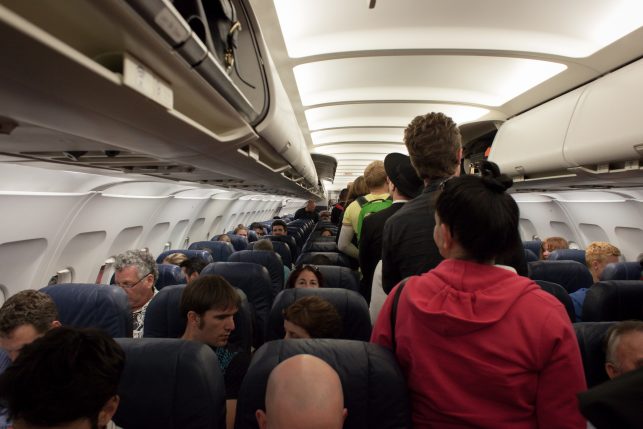
We all have tips and tricks that we use to get through journeys better and arrive as refreshed and effective as possible at our destination, be it for business or for recreation. Like most people, my travel tips have been gathered through trial and error, whether that’s from high or low quality flight experiences to tuk-tuks in Laos, and two day train journeys in India (with 11 people for 6 seats).
- Be appreciative. What some of my rougher journeys has taught me, is to appreciate the amazing levels of comfort we get from international air travel these days. The quality of food, seating and entertainment onboard international flights these days has grown exponentially in the last 20 years. I find it’s useful to remember how comfortable the airlines these days are trying to make us, so at least we start journeys with some aspect of gratitude. And for me, certainly some of my more dodgy travel trips in non-airline transportation has taught me to really appreciate everything we have.
- Be loyal. While every airline around the world is trying to get you to join their air points programs, you’ll find an exponential improvement in your level of service if you stay predominantly loyal to one airline or airline group. Regular fliers with single groups end up with high levels of comforts in subtle ways. I can’t tell you the number of times I’ve flown on regional and international flights with Air New Zealand, even in economy class, only to find on a near full plane that I’m one of the only people with a spare seat beside me, thus giving me the elbow room of business class, even if I don’t have the meal to support that.
- Work the system. As with most business industries, many organizations copy each other these days very quickly, and Air New Zealand’s points program has been mimicked all across the world. Whatever your status level with an airline frequent flier program, be sure to give them a call once or twice a year and have them explain to you fully all the various benefits that they come to offer. For example, did you realize that the Air New Zealand 5 valet parking vouchers for elite members can be transferred and used by other colleagues, provided you have permission and the air points number of the person receiving 5 valet parkings per year. For elite fliers with Air New Zealand, did you realize that aside from two recognition upgrades on international flights, there is an upgrade systems between recognition upgrades and the regular auction for one-up, where elite members can use their air points to be guaranteed a fixed rate to get on board one-up, one cabin class up. From economy to premium economy, a one-up for an elite member costs around 250 air points dollars, as opposed to $750 to buy the same upgrade through cash.
- Stay clean. One of the frustrations of travel is the thin layer of grime you feel no matter what form of transportation you choose. This affects passengers in economy, just as much as it does business class. Many people travel internationally at the end of a busy day, so be sure to pack your clothes to change into and have a shower at the airport before you depart internationally, and also have a shower at the halfway point and change some of your clothes at that point. This allows you to wash off half your journey, so it doesn’t feel psychologically like you’ve travelled such a long journey, especially at the end of a day.
- Talk to any seasoned traveler and you’ll realize one of the biggest issues around altitude is dehydration. Pretty much every airline doesn’t do enough to maximize the hydration of their passengers, so you’re going to have to back yourself on this one and not rely on their glasses of water being handed out at random times in the journey. Personally, I recommend the 1Above drink available at Auckland Airport to help with jetlag. But equally I’d recommend anybody flying from New Zealand or Australia to Europe, should take on board one to two liters of liquid extra on each 12 hour leg. This may make you get up more regularly to visit the bathroom, but that’s better for your general circulation and reduced risks of DVT.
- Fight the bug Another issue for international travel is the risk of breathing in everybody else’s germs. I find taking a combination of throat sweets or throat spray, general healthy vitamins and some sort of bug fighting vitamin like a Viralex. I also recommend taking something to help you sleep, ideally something natural such as magnesium powder; that way, you’ll manage to get a few hours of shut eye.
- Bring your own comfort. Inflatable pillows are a great way to maximize your level of comfort, even if you’re sitting in economy class, but having two such items can really make the world of difference, especially given the lack of comfort on most armrests on most airlines. Even a rolled up jumper or jacket would make the world of difference to the seat. Earplugs and an eye mask are an absolute must to avoid having to wake up an hour and a half before every meal being served.
- Maximize your circulation. One of the issues for the human body in travelling 24 hours or more is the severe lack of circulation. While exercise and walking is going to help, you need to find ways to be able to maximize your circulation no matter whether you’re walking or sitting. Personally, I recommend the circulation booster Mobile created by an Australian company, which are silver-lined socks with a TENS machine which literally contracts the muscles in your feet to keep your circulation going. This reduces feet swelling, fatigue and the risk of DVT. If you don’t want to use this, simply using compression socks is said to help to a fair degree. If neither of these appeal, regularly sitting in your seat circling your ankles and moving your toes about is very effective, as is massaging each hand fully to stimulate the blood flow and circulation across your whole body.
- Have a sports massage. In keeping with the circulation issue, whether you’re flying in economy or business, one of the issues is your lack of movement for over 24 hours, and the human body was made to move. If you ever arrive feeling cramped at a destination, it’s worth paying to have a professional sports massage for an hour to straighten out your body and allow the toxins to be released. This will massively minimize fatigue.
- Adjust to the time zone. One of the important things with international travel is to adjust quickly to the time zone that you’re entering. Most people know it’s important to immediately put the effort in into staying awake in the time zone which you’ve just entered into. What I found is, if you struggle to stay awake to fit into the time zone, it could take you many days to adjust to that time zone. The traditional Air New Zealand flight into the UK gets in at 11 o’clock in the morning, so staying awake until 9 or 10 o’clock at night, it certainly is a mammoth effort. I found flying to the UK via Singapore gets you in at 3:40 in the afternoon, meaning your relative effort to stay awake on the first night is a lot easier.
- Use the sun. We know that the sun helps with Vitamin D creation which can help energy and fatigue, but the sun on your skin also helps to shift your mindset and mental adjustment to whatever the new location is. So wherever you are, get out in the sunshine or in the light of the day to help trick your body to adjust to the turnaround times.
- Don’t sweat the small stuff. If you’ve travelled extensively, you realized that there are always little things that can go array during a long trip. The key is to ensure that when small things happen, you don’t get fixated on them and therefore perpetuate and attract more of them to yourself. Simply let it go, there’s always another trip later.